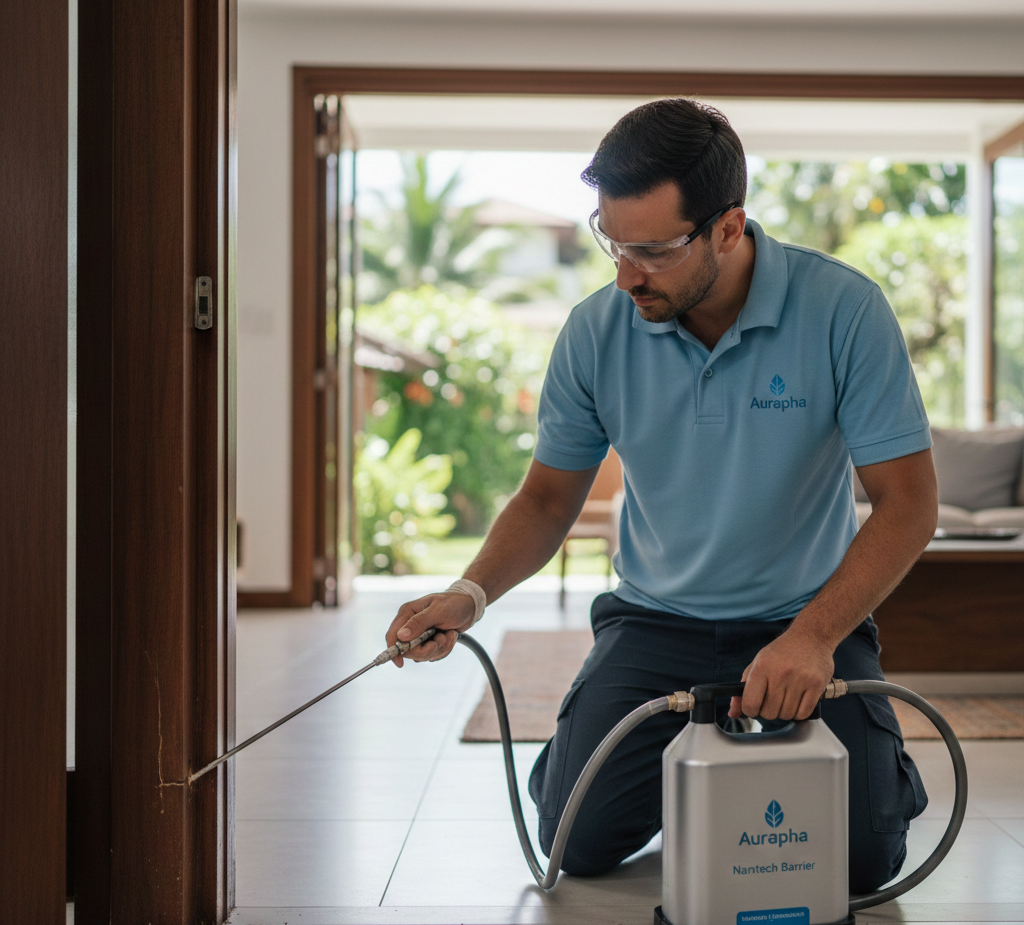
Termites cause significant structural damage in the billions of dollars each year globally. When a homeowner detects an infestation, many times their immediate instinct is to grab the strongest insecticide available; however, many people do not realise that “killing” a termite and “keeping” it away from the home are completely different things.
Most importantly, while many homeowners make the mistake of treating for and eliminating their current termite problem, they do not take the preventative steps necessary to keep future infestations from occurring. In fact, most homeowners will spend far more money trying to eliminate future infestations than are spent on any current infestation.
The Problem with “Kill-Only” Thinking:
Using a termiticide that works by simply killing termites upon contact is treating the symptom, not the cause. The U.S. EPA recognizes a class of pesticide products called “kills only” termiticides; these are products designed to eliminate an active infestation, but once the chemical has worn off, do not provide enough residual activity to prevent a new infestation from occurring. As stated in a 2022 study published in the journal Insects (PMC), these termiticides provide no protection against structural infestations when the chemical wears off.
A significant study was carried out by researchers at University of Florida’s Institute of Food and Agricultural Sciences (UF/IFAS). It was published in Journal of Economic Entomology. The results of this study show that an application of non-repellent liquid termiticides, which would include many commonly used termiticides, will only kill between 1.5% and 4% of a termite colony. Consequently, the remaining termites in the colony will avoid that area that was treated and would often ultimately restructure their colony, becoming an ongoing threat to that structure.
Repellents: Prevention Over Reaction
Repellents’ philosophy is entirely different. Instead of waiting for the termites to get in and then killing the ones that get in, repellents use the philosophy of deterrence. No entry means no colony establishment. No colony establishment means no re-infestation.
This is the difference. A repellent does not simply solve the problem today; it prevents the problem tomorrow from occurring today. If the termites cannot get in to the foundation zone of your home, they cannot establish feeding galleries, recruit members to the colony, and grow into a mature colony to cause damage to your home. You are literally cutting the problem off at the root.
A research study published in Heliyon (2023) also shows the trend towards the use and interest in the use of natural repellents such as essential oils and organic compounds to repel termites without the use of toxic chemicals.
The Smarter Long-Term Strategy:
It is rewarding to kill termites! However, as pest management professionals point out, it’s pretty much useless in controlling the termite population. If you are applying repellent properly around the perimeter, this will help prevent a colony from ever establishing in your home. With periodic inspections, these products are preventative rather than reactive.
The data shows this is very simple. When protecting your home for years, not just weeks, preventative measures are always better than elimination methods (killing).
"Aurapha’s science-driven approach to API development demonstrates how rigorous chemistry, process robustness, and regulatory readiness can translate complex molecules into reliable, scalable drug substances."
Senior Pharmaceutical Development Partner