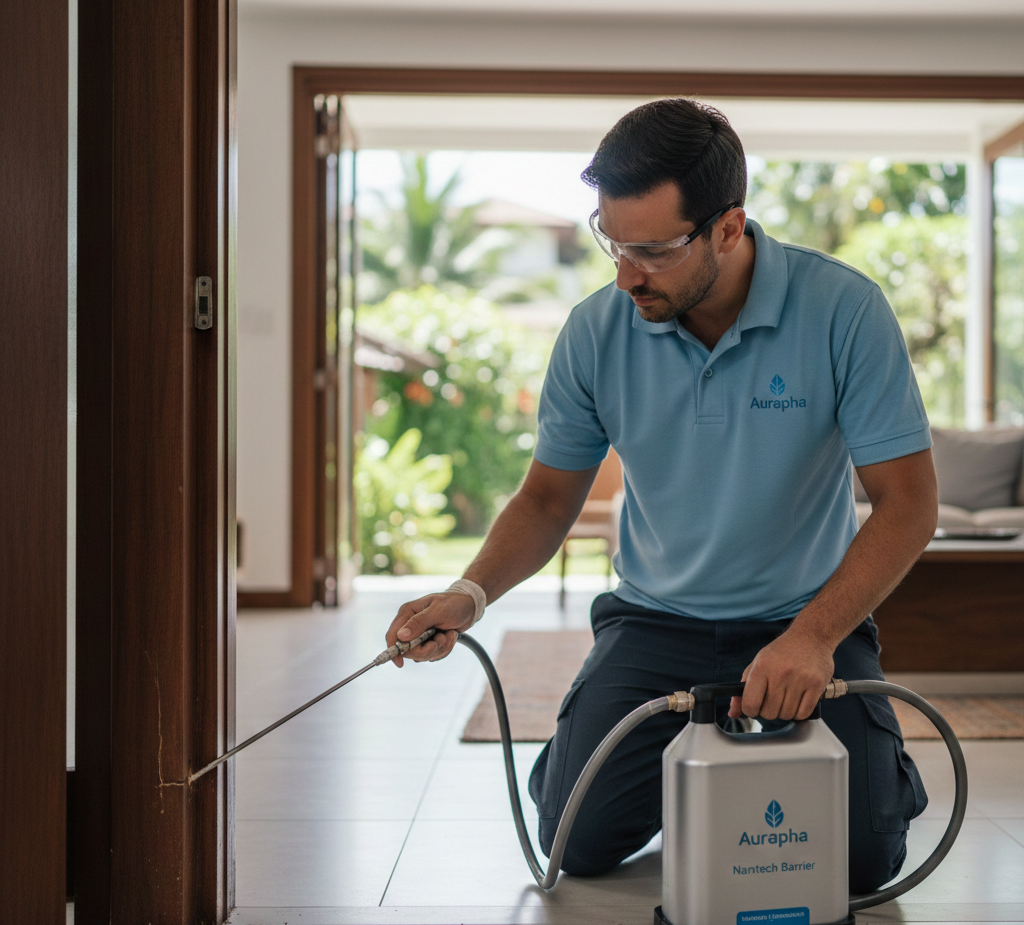
When pest control technicians pull up to your home, the chemicals they carry in often don’t come with a conversation about what’s inside them. Two of the most common classes used in termite treatment: neonicotinoids and pyrethroids
They have been trusted staples of the pest control industry for decades. But a rapidly growing body of research is now asking a question that every homeowner, parent, and pet owner deserves to have answered:
At what cost to our health?
What Neonicotinoids Are Really Doing Indoors?
Neonicotinoids, which act on the insect nervous system much like nicotine, do not just harm insects; they persist in the environment and can accumulate in soil, water, food, and drinking water. Therefore, long-term low dose exposure presents an acute hazard to household members. The potential risks to younger family members are extremely alarming.
According to the EPA, there were over 800 human poisoning cases due to neonicotinoid exposure reported between 2018 and 2022, and common symptoms are headache, dizziness, nausea, and skin irritation from various types of pest control, including household pest control methods. Animal studies show that when pregnant mothers are exposed to neonicotinoids during pregnancy, the fetuses’ brains can be adversely affected, producing measurable decreases in brain size.
These same regions of the brain are smaller in children that have been diagnosed with attention deficit hyperactivity disorder (ADHD). The developing nervous system of the fetus and the young child is the most susceptible to neonicotinoid exposure, yet current regulatory exposure limits do not take into account the additional sensitivity of these groups of individuals (Sass, Donley, & Freese, 2024).
The Pyrethroid Problem at Home:
The use of Pyrethroid-based pesticides indoors poses health risks due to their effects on the nervous system. As noted by the U.S. Agency for Toxic Substances and Disease Registry (ATSDR), exposure to high levels of Pyrethroids can lead to dizziness, headaches, nausea, muscle twitches and in some cases, seizures or loss of consciousness.
Pyrethroids have been shown to remain in household dust long after their initial application to floors or surfaces. In some studies, tracking Pyrethroid levels post-application of indoor pest control, it was determined that concentrations remained detectable in household dust even up to one year later. Thus, when a pest technician has completed their indoor pest control service, you and your family are still continuously exposed to pesticide residue.
Additionally, for your pets there are additional risks associated with the pesticide. Pyrethroids are extremely toxic to cats and fish, and can cause drooling, vomiting, restlessness, and/or skin reactions in dogs.
The Safer Alternative: Termicide by Aurapha
Innovation can work for you and your family’s health by eliminating the use of toxic chemicals and pesticides within the home. There are many alternatives available to control termites without exposing your family to harmful residues associated with chemical termiticides, including a non-toxic, natural nano-repellent called Termicide developed by Aurapha.
This product is manufactured specifically for use in homes. It’s completely odourless and contains no harmful vapours or other indicators of chemical contamination inside your house. It’s also considered safe for people (including children, pregnant women, seniors, and pets) living in sensitive environments.
Instead of attacking termites with neurotoxic chemicals that remain in the air and accumulate in dust for months after application, Termicide uses repellent properties at the nano level to/barrier them from entering your home without putting anyone at risk.
In conclusion, the pests should be eliminated without harming the people living in the home through the pesticides used to kill them. While there is a growing body of evidence regarding neonicotinoids and pyrethroids, the need for safer alternatives that do not contain toxic chemicals becomes more obvious. The use of Termicide by Aurapha is not merely about a product option for pest control; it represents an option that protects both your family and your home from pests while using only an environmentally friendly method of pest management.
"Aurapha’s science-driven approach to API development demonstrates how rigorous chemistry, process robustness, and regulatory readiness can translate complex molecules into reliable, scalable drug substances."
Senior Pharmaceutical Development Partner