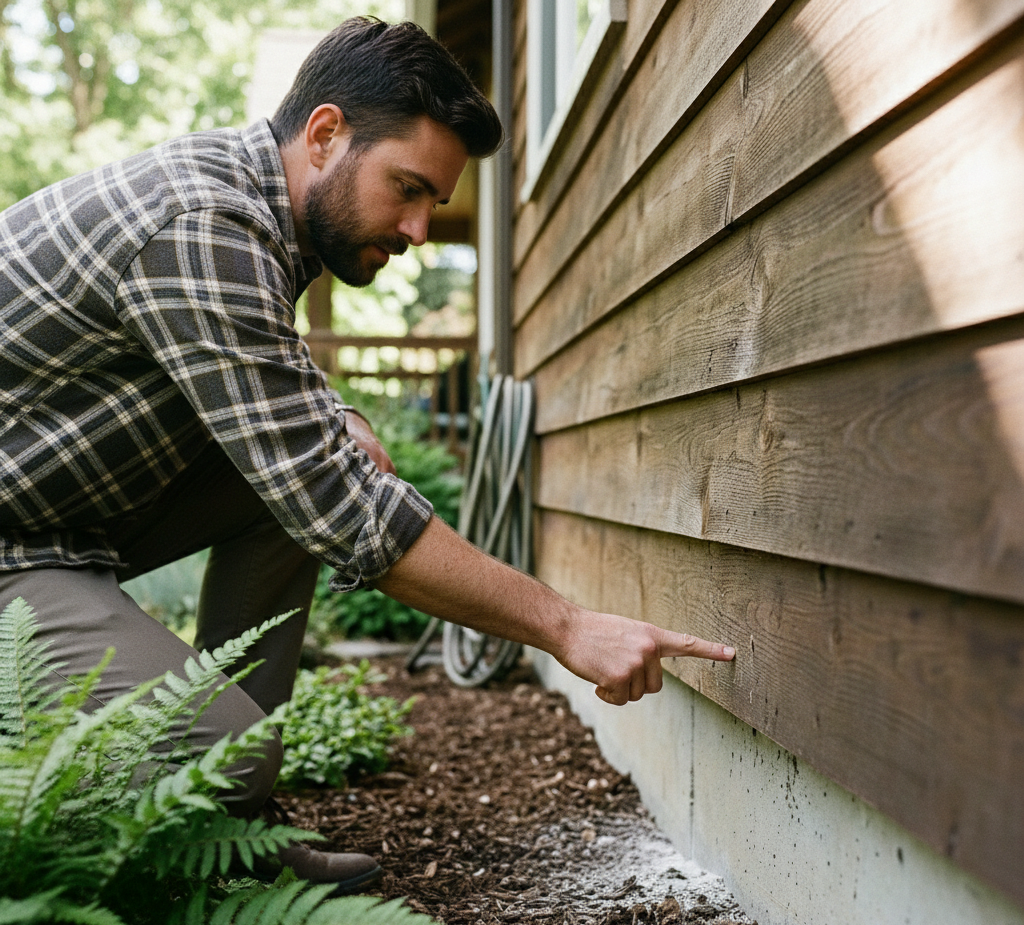
In tropical to subtropical climates, there is no single season that will not experience termite activity. Instead, these regions are at risk from the destructive power of termites all throughout the year. However, due to increasing global temperatures changing where termites can survive, homeowners who live in high-risk areas are starting to see where termites will appear. Therefore, when termites arrive at your home, you will no longer only worry about whether or not they come; instead, you will become concerned about how well prepared you are for their arrival.
Warm Climates Are Termite Breeding Grounds.
Termites are wired for heat and humid environments. It is the heat and the humidity in these types of climates that allow for the quick growth of termite populations, and it is warm and humid weather that supports swarming behavior (the reproductive process whereby reproductive termites leave a colony to create a new colony). Since termites do not seasonally change their reproductive habits but take advantage of the climate throughout most of the year, compared to cooler areas, they will establish and grow their colonies with more rapidity and aggressively in warmer climates.
Rainfall, temperature, and relative humidity determine how many termites will be located in a certain area as well as how many different types of termites there are around the world thus, the majority of the world’s termites are found in tropical regions with relatively few species at higher latitudes. In India alone, there are 337 known species of termites, with 35 of these known to be economically damaging to agricultural products or buildings (ResearchGate).
In warm climates, damage tends to occur rapidly therefore, Formosan termites are capable of doing significant damage to a structure within a six-month period when the conditions are perfect (warm and moist). If the damage is not discovered, it will take about two years for the termite colony to complete sufficient structural damage that the house will need to be demolished.
A Problem That Is Only Getting Bigger:
Notably, climate change is actively increasing the territory of termites. Predictive climate models of 13 of the world’s most invasive termite species have revealed that almost all of them will significantly increase their global distribution by 2050 and 2070, regardless of the climate change scenario. As per this study published in Ecology and Evolution (Buczkowski & Bertelsmeier), the best potential invasion hotspots for 2050 have been mapped for the tropical regions of the world, where a large percentage of all continents have environmental suitability for the presence of multiple invasive species.
This is also reflected in the economic damage caused by termites. As per the research compiled by Rust and Su, the annual global economic loss caused by termites exceeds $40 billion, of which 80% of the damage is caused by subterranean termites. The global termite treatment market, which stood at $4.5 billion in 2023, is set to almost double by 2032, as per a 2024 industry analysis.
Why Long-Lasting, Targeted Protection Matters Most in High-Risk Regions?
Standard short-cycle termite treatments just aren’t able to compete with the continuous demand for treatment due to the year-round activity of termites in hot humid climatic zones like those found in tropical regions therefore, homeowners in these high risk locations require an effective long lasting barrier against these conditions that make tropical environments attractive to termites to begin with, rather than a short term, reactive solution that will fail in less than 90 days.
That is where Aurapha’s Termicide provides a significant benefit because it is a nanotechnology based repellent and is specifically formulated for structural protection against termites for periods of time well beyond typical treatment methods by creating an ongoing deterrent barrier to termites that does not decompose due to the environmental conditions (i.e. heat and moisture) that add to the activity of termites. This product is non-toxic and odourless, allowing it to be safely applied in sensitive areas both indoors and out with no health or safety concerns associated with traditional chemical applications.
In places with constant termite activity, long term structural protection from these pests is not an option; it is an absolute necessity!
"Aurapha’s science-driven approach to API development demonstrates how rigorous chemistry, process robustness, and regulatory readiness can translate complex molecules into reliable, scalable drug substances."
Senior Pharmaceutical Development Partner